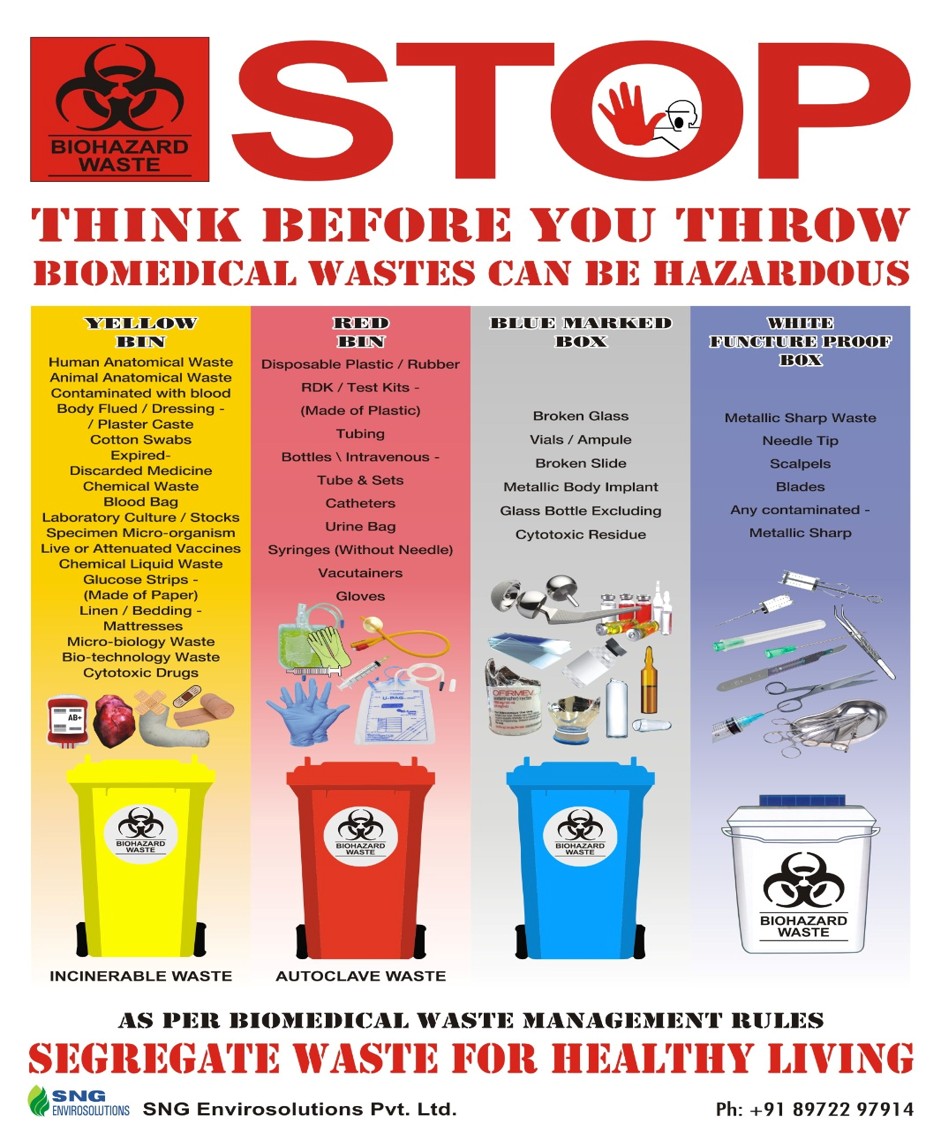
An Awareness Poster for Bio-Medical Waste (BMW) Management is a critical tool used in healthcare settings to ensure the safe segregation, collection, and disposal of hazardous materials. These posters act as a quick-reference guide for medical staff and the public to prevent the spread of infections and environmental pollution.
A standard Awareness Poster, such as those used by HCF, typically includes the following elements:
- Color-Coded Segregation Chart: This is the most vital part, showing which waste goes into which bin.
- 🟡 Yellow Bag: Human/animal anatomical waste, soiled waste (cotton swabs, blood-soaked bandages), expired medicines, and chemical waste.
- 🔴 Red Bag/Container: Recyclable contaminated waste like tubing, bottles, syringes (without needles), and gloves.
- ⚪ White Puncture-Proof Container: Sharps waste including needles, scalpels, and blades.
- 🔵 Blue Cardboard Box/Bin: Glassware (broken or discarded) and metallic body implants.
- Biohazard & Cytotoxic Symbols: Clearly visible icons indicating the dangerous nature of the waste.
Primary Application Areas:
Posters and placards are strategically placed in the following locations to guide healthcare workers and staff.
- Clinical Wards & Patient Rooms: To assist nursing staff and doctors in disposing of soiled bandages, cotton, and IV sets immediately after use.
- Operation Theatres (OT) & Labour Rooms: High-waste areas where anatomical waste (tissues/organs) and sharp objects require rapid, specific disposal.
- Laboratories & Diagnostic Centres: Used for the segregation of microbiological waste, blood samples, and culture specimens.
- Nursing Stations: Serves as a central reference point for staff preparing medications or handling equipment.
- Waste Storage Areas: Placed at central collection points to ensure that waste bags are correctly sealed and labeled before being transported.
- Specialised Clinics: Locations like dental offices, blood banks, and dialysis units where specific types of hazardous waste are common.
Non-Clinical & External Areas:
- Animal Houses & Veterinary Colleges: For managing animal anatomical waste and experimental waste.
- Mortuaries: Essential for handling and disposing of human tissues and body parts.
- Medical Research & Training Centres: Used as educational tools for students and researchers to establish safe habits.
- Home Healthcare Settings: Increasingly used in households where medical procedures like injections or wound dressing are performed regularly.
Available Sizes :