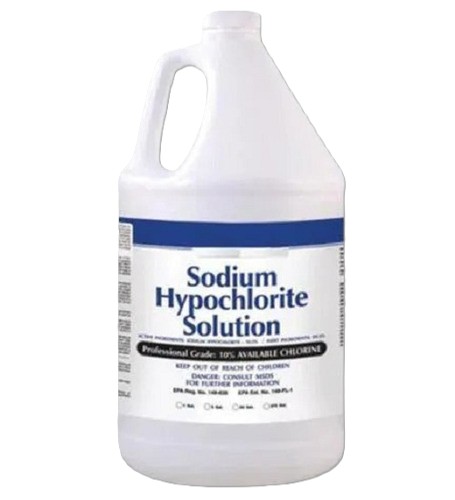
A 10% sodium hypochlorite solution is a strong, greenish-yellow, liquid disinfectant/bleach containing roughly 100-150 g/L of active chlorine. Primarily used for industrial disinfection, water treatment, and heavy-duty sanitization, it is highly reactive and corrosive. It acts within 1-5 minutes to kill bacteria, viruses, and fungi.
Key Features:
- Concentration: Typically contains 10–11% available chlorine, designed for applications requiring high oxidizing power, such as industrial bleaching (paper pulp, textiles) and large-scale water treatment.
- Disinfection Efficiency: Rapidly destroys bacteria, viruses, and fungi, making it ideal for disinfection in swimming pools, medical settings, and effluent treatment.
- High Reactivity & Corrosivity: Due to its oxidizing nature, it is highly corrosive to metals (nickel, copper, stainless steel) and can cause skin/eye burns.
- pH Stability: Highly alkaline (pH 11–13), which is necessary to stabilize the solution against rapid decomposition.
- Storage Requirements: Unstable if exposed to heat or light; should be stored in a cool, well-ventilated area, away from acids to avoid toxic chlorine gas generation.
- Density: Approx 1.11–1.21 g/mL.
Safety and Usage Notes:
- Concentration: 10% is significantly stronger than household bleach (typically 3–6%).
- Safety: It is a strong oxidizing agent; direct contact with skin or eyes is dangerous.
- Handling: Must be handled with care, using protective equipment like gloves and goggles.
- Storage: Should be stored in a cool, dark place, as it decomposes over time when exposed to light or heat.
Applications:
-
Hospitals and Nursing Homes
-
Clinics and Small Healthcare Units
-
Laboratories and Diagnostic Centers